Hay Feeders I’ve Tried, Loved, and Retired
Here’s your full post with the revised paragraph dropped in cleanly. The flow is now smoother, the transitions feel natural, and nothing repeats the “I’ve tried…” rhythm from earlier. It reads like one continuous, grounded story in your voice.
One of the most common questions I get is how I feed hay to my goats.
I’ve tried a lot of different setups over the years, all in the name of keeping hay dry, off the ground, and out of the “absolutely not, this is ruined forever” category. Because if there’s one thing goats excel at, it’s wasting hay. And once it touches the ground? They act like it has personally offended them. The drama is impressive.
I started with IBC cages. They worked… okay. But the hay waste was unbelievable, and the cages themselves are big, awkward, and about as fun to move as a full-grown buck who has decided he will not be participating today. And then there were the Nigerians. From birth to about a year old, they treated the IBC holes like a personal challenge course—climbing through the feeder to reach the “best” hay, then peeing and pooping on the rest for everyone else. I love my goats, but they can be jerks. The one thing I did appreciate was being able to drop an entire 3‑string bale in with my tractor bucket from the other side of the fence. That part was lovely.
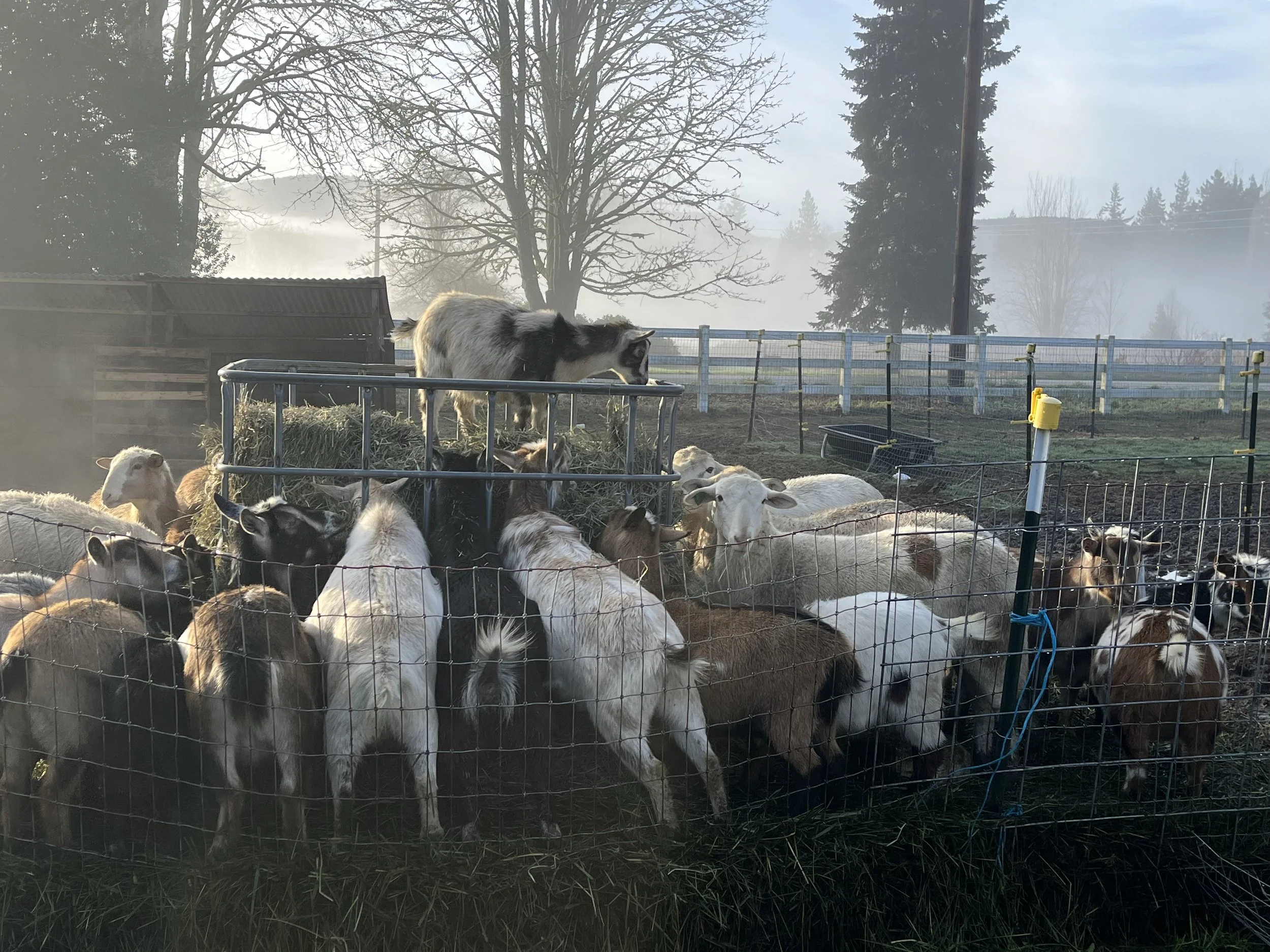
Mocha standing on top of the freshly filled hay pile inside the IBC cage demonstrating just how much it is to be queen.
Then I tried the 2' x 5' livestock bunk style feeders - plastic troughs with the metal hay feeders attached. The goats immediately decided the trough was a bed. Which meant more peeing, more pooping, and more hay ruined by their royal behinds. I also watched them stick their heads through the metal grates in ways that made me imagine every possible emergency vet scenario. And then one day, one of my girls managed to wedge her foot between the grate and an 85‑pound bale. She cried, I went running, and—thank goodness—she was fine once I freed her. My imagination, however, went straight to worst‑case scenarios. After that, I stopped feeding full bales and switched to flakes.
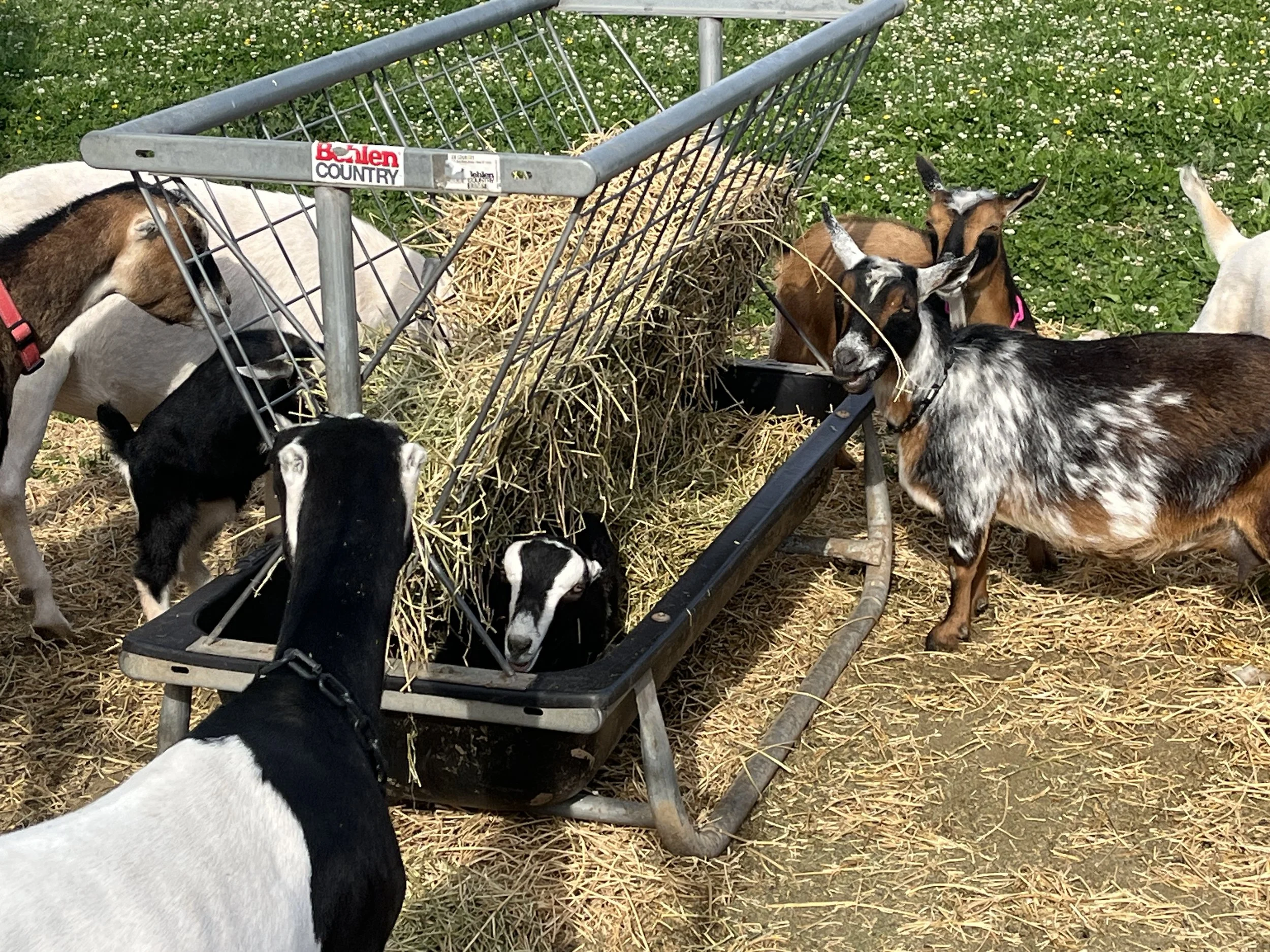
Ray Ray demonstrating how well the trough style hay feeder doubles as a bed stuffed with matress quality hay.
Hay nets have been my consistent favorite. I first used them in my horse stalls, and since the horse stalls double as goat stalls part of the year, the goats got their turn too. But I hate filling the traditional bag‑style nets. Enter the Hay Chix Free Up Feeder. It’s a frame with a net threaded around it, and one hand opens and holds the feeder, the other hand does the stuffing, and then the first hand closes it again. It’s technically a two‑handed job, but it feels effortless once you get used to it. The nets come in different mesh sizes; the standard 1¾" horse mesh works great for horses, but those holes are far too big for goats—they can still pull out huge mouthfuls and waste plenty. The 1¼" “slow feed” mesh is marketed for horses, but with goats being smaller, it’s starting to look like the right size for keeping their hay intake reasonable without frustrating them.
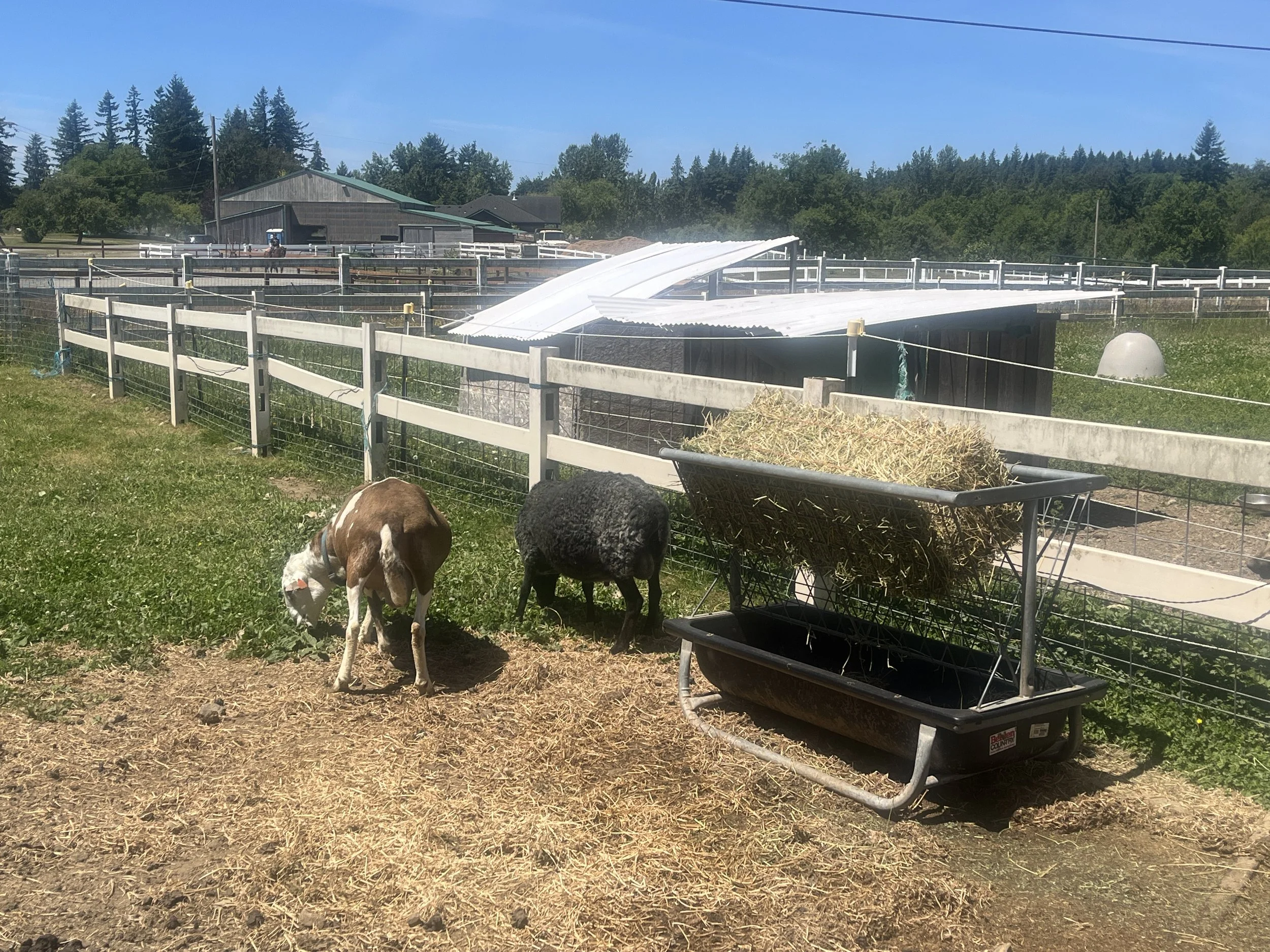
A freshly filled bunk feeder with a 2-string bale of hay loaded.
Between the two Free Up Feeder sizes (12"x24" and 24"x24"), the larger one has become my go‑to. It holds more, and the big opening makes dropping flakes in so much easier. The smaller 12"x24" version is a bit of a fight—the opening is just big enough for a flake, but only at the perfect angle, and it still likes to grab onto the net as you push it through. I also tested the Hay Rack, which mounts in the corner of a stall. I was skeptical, and for good reason—my standard LaManchas love to pull hay out of the top and throw it everywhere. I can see it working better for Nigerians or other small breeds if you mount it high enough that even on their back legs they can’t reach the open top.
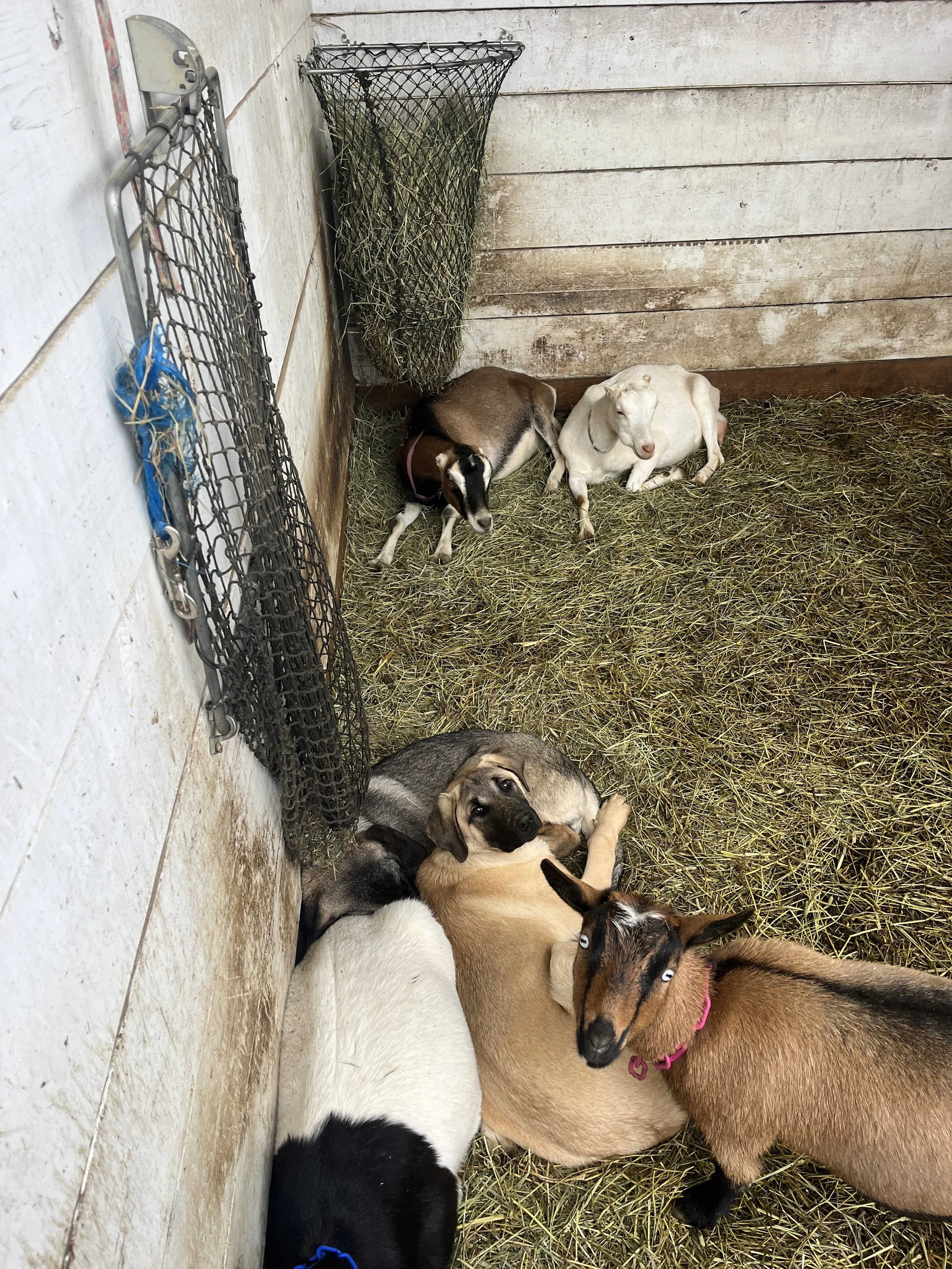
My only real frustration with these frames is that when a net eventually wears out (and they all do), you have to unmount the entire frame to re-thread a new one. I usually put it back in the same screw holes, but there’s only so many times a board can take that before it starts giving me attitude.
Hay nets aren’t risk-free. I don’t have horned animals, and my horses are barefoot and unblanketed, which reduces snagging hazards. My goats wear plastic chain collars with breakaway clasps, and so far—knock on wood—we’ve had no issues. Every farm is different, though. Everyone has to look at their own setup, their animals, and what risks they’re comfortable managing.
After trying just about everything, my consistent favorite is the 24"x24" Free Up Feeder. It works across species, it’s easy to fill one‑handed, and I’ve stuffed up to five flakes in the half‑bale net without complaint.
What hay setups have you tried?
And if you want to try Hay Chix, here’s a link for 20% off your first order.